All Things Bigfoot Embroidery Bundle
First Impressions: Playful, Punchy, and Unapologetically Folkloric
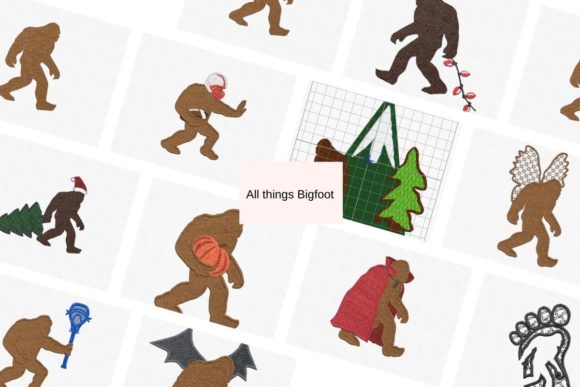
Opening the All Things Bigfoot Embroidery Bundle, I didn’t see just another novelty theme—I saw a cohesive visual language. There’s warmth in the line work, intention in the proportions, and real personality across each variation: the curious Bigfoot peering from pine boughs, the grinning holiday version clutching candy canes or jack-o’-lanterns, even the subtle silhouette motifs that read as texture rather than cartoon. This isn’t slapdash clip art stitched over—it feels like someone who *gets* embroidery sat down and designed for stitch behavior first, character second. The shapes hold up at 3–4 inches wide, with clean outer edges and thoughtful negative space—critical when you’re stitching on a curved surface like a cap or a baby onesie.
A Real Project Test: Custom Bigfoot Tote Bags for a Local Boutique
Last month, I used three designs from the All Things Bigfoot Embroidery Bundle to create limited-edition canvas tote bags for a mountain-town gift shop. We chose medium-weight natural canvas—sturdy but not stiff—and paired it with matte cotton thread in forest green, charcoal, and cream. The result? Instant recognition, zero confusion, and genuine smiles at the register. Customers didn’t just buy a bag—they bought a story. That’s the quiet strength of this bundle: it bridges whimsy and wearability. The Halloween design held crisp detail without excessive fill stitch density; the Christmas Bigfoot kept its charm even scaled down to 2.75” on the pocket. No puckering. No thread breaks. Just confident, readable machine embroidery design.
Where It Shines (and Where to Pause)
The All Things Bigfoot Embroidery Bundle excels in contexts where authenticity meets approachability:
- Custom apparel: Works beautifully on sweatshirt embroidery and relaxed-fit tees—especially with open-stitch elements that let fabric breathe.
- Embroidered patch production: Several designs have clean outlines and moderate fill areas, making them ideal for iron-on or sew-on patches destined for backpacks or denim jackets.
- Baby embroidery and nursery decor: The gentler Bigfoot interpretations (think sleepy Bigfoot in a crescent moon, or one cradling a tiny pinecone) avoid caricature and land with warmth—not kitsch.
- Holiday embroidery: The seasonal variations aren’t afterthoughts. They’re balanced in scale, thread count, and motif integration—no awkward crowding or forced festivity.
- Etsy seller & small shop product development: As digital embroidery file assets, these designs slot cleanly into printable mockups and product listings. Their consistent style builds brand cohesion across listings—even if you’re selling mugs, tea towels, and pillow covers under one shop name.
But let’s be practical: this bundle isn’t magic. On thin or highly stretchy fabric—like lightweight jersey or slubbed rayon—some denser fill areas may need extra stabilizer or reduced stitch density in your editing software. Curved surfaces (caps, baby bonnets) demand careful placement; test the hoop size first and consider simplifying fine antler details if stitching on rigid foam-backed caps. And while most designs avoid micro-lettering, double-check any text-based variants—tiny slogans like “Sasquatch Approved” may blur unless stitched on stable, tightly woven fabric with sharp needles and quality thread.
What It Adds to Your Finished Product—Beyond the Stitch
Using the All Things Bigfoot Embroidery Bundle does more than decorate—it deepens perception. A handmade product with these designs reads as intentional, not incidental. Customers notice the care in proportion and spacing—the way a satin stitch beard catches light differently than a running-stitch trail of footprints. That nuance builds trust. It tells buyers you didn’t grab the first Bigfoot file you found—you curated. For craft business owners, that translates directly to perceived value and willingness to pay a premium. For Etsy sellers, it means better photo contrast, stronger thumbnail recognition, and fewer “Is this machine or hand-stitched?” questions in comments.
Designer Notes You’ll Actually Use
Before stitching your first project, here’s what I do—and recommend:
- Always test on scrap fabric that matches your final substrate—same weight, same weave, same pre-wash status.
- Check thread color contrast on both light and dark backgrounds. Some Bigfoot fur tones rely on subtle layering—make sure they read clearly on your chosen fabric texture.
- Review stitch density in your embroidery software. If a design feels heavy for your fabric, reduce fill stitch % slightly—especially in shaded areas—rather than risking stiffness or distortion.
- Confirm hoop size compatibility. Not all Bigfoot poses fit neatly in a 4x4 hoop—some holiday or applique versions may require 5x7. Don’t assume.
- Inspect small details at 200% zoom: eyes, claws, pine needle tips. If they’re too fine for your machine’s minimum jump distance, simplify before stitching.
- Test in black-and-white mockups. If the design loses legibility without color cues, reconsider placement or scale.
- Use proper stabilizer: medium tear-away for stable wovens, cut-away for knits, and fusible + tear-away for lightweight linens.
- Verify licensing before selling finished items or reselling digital files. Since this is a Bundles product, confirm whether commercial use is included—or if separate permissions apply.
Final Thought: A Bundle That Feels Like a Design Partner
The All Things Bigfoot Embroidery Bundle doesn’t try to be everything. It leans into its theme with sincerity and smart execution—and that’s exactly why it works so well in real projects. Whether you’re embroidering a cozy sweatshirt for a hiking club, stitching personalized baby gifts for new parents in the Pacific Northwest, or building a holiday collection for your Etsy shop, these designs carry weight without heaviness. They’re friendly but not childish, detailed but not fussy, thematic but never tired. In a market flooded with generic embroidery file bundles, this one earns its place in my active design folder—not as a novelty, but as reliable, expressive, and quietly professional design assets.