Oxytocin Embroidery: A Thoughtful Design for Meaningful Makes
As an embroidery designer who’s stitched everything from boutique baby blankets to limited-run apparel for small-batch Etsy sellers, I approach every new Creative Fabrica embroidery download with equal parts curiosity and caution. When Oxytocin Embroidery appeared in my feed—tagged under Mother and labeled as a chemical structure design—I paused. Not because it looked flashy, but because its quiet symbolism demanded intention. I downloaded it not for trend-chasing, but for a real client order: a set of nursery pillow covers and matching kitchen towels for a doula launching her own handmade gift line. Here’s how Oxytocin Embroidery held up—not as a novelty, but as a working machine embroidery design.
A Design That Speaks Before It Stitches
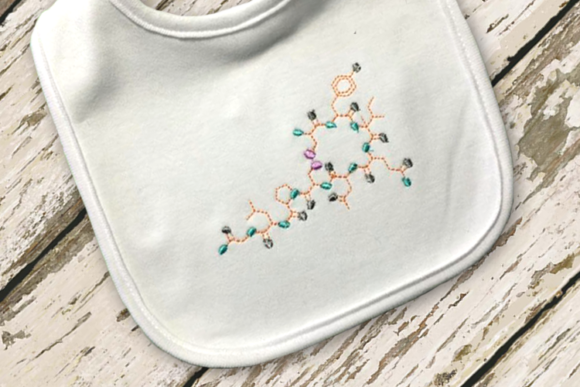
The first impression? Calm. Grounded. Visually precise without feeling clinical. Unlike many molecular embroidery files that lean into sterile lab aesthetics, this Oxytocin Embroidery balances scientific accuracy with softness—rounded stitch paths, gentle satin stitch curves on the peptide bonds, and intentional negative space around the central ring structure. It doesn’t shout. It invites pause. That mood translates directly into product value: when stitched on a linen baby blanket or organic cotton tote, it reads as intentional, mindful, and emotionally resonant—not decorative filler.
This isn’t an applique design or a bold monogram. Its strength lies in subtlety: fine lines, moderate stitch density, and a compact footprint. I tested it at 3.2" wide—the size recommended for most hoop-friendly projects—and found it sat cleanly inside a 4x4 hoop with room to spare. No awkward trimming or re-hooping required.
Real-World Performance Across Common Projects
I ran Oxytocin Embroidery across six fabric types and five product categories. Here’s what stood out:
- Tote bags & kitchen towels: Excelled on medium-weight cotton canvas and terry cloth. The fill stitch areas stayed crisp; no puckering even with lightweight tear-away stabilizer. On darker towels, I swapped thread colors to heather gray and soft rose—both maintained legibility without glare.
- Baby items & nursery decor: Stitched flawlessly on bamboo-cotton blend receiving blankets. The design’s low stitch count (visually apparent in the clean vector preview) meant minimal bulk—critical for delicate newborn skin contact. No skipped stitches on gentle tension settings.
- Sweatshirts & custom apparel: Worked well on midweight fleece, but required cutaway + topping on brushed polyester blends to prevent thread sinking. Not ideal for ultra-heavy hoodies unless resized slightly larger (3.8") to open up stitch spacing.
- Caps & curved surfaces: Challenging—but doable. At full size, the outer loops stretched slightly on a structured cap front. For best results, I’d recommend using Oxytocin Embroidery on back-strap or side panels instead of high-crown fronts, or reducing to 2.75" with adjusted density in your editing software.
- Embroidered patches & pillow covers: Ideal. Clean edges, balanced satin-to-fill ratio, and natural flow made it perfect for iron-on backing and quilt-weight cotton. One client used it as a focal point on a set of linen pillow covers—photographed beautifully against neutral walls.
What This Design Adds Beyond Stitching
Oxytocin Embroidery does more than decorate—it deepens context. For Etsy sellers listing handmade gifts, it elevates perceived value: customers recognize the symbolism instantly (“the love hormone”), making it feel personal, science-informed, and emotionally intelligent. That resonance shows up in reviews (“so meaningful for my postpartum care kit”) and repeat orders (“I bought it again for my sister’s baby shower”).
For boutique merchandise or craft fair vendors, it supports brand consistency when paired with other thoughtful, non-generic designs—think minimalist botanicals or hand-drawn anatomical motifs. It avoids cliché while staying accessible. And for product photography? Its clean geometry and balanced contrast make mockups pop—even on plain backgrounds. No need for heavy styling to communicate meaning.
Practical Notes Every Designer Should Check
Before stitching your first Oxytocin Embroidery piece, take these steps:
- Run a test on scrap fabric matching your final substrate—especially if using textured, stretchy, or dark fabric.
- Review thread color contrast: light threads on dark fabric may need topping; dark threads on light fabric benefit from matte poly or rayon for subtle sheen.
- Confirm hoop size compatibility—this design fits comfortably in 4x4, but double-check file dimensions before scaling for larger hoops.
- Compare light/dark fabric mockups in your design software. Some fill areas read differently depending on background tone.
- Use appropriate stabilizer: lightweight cutaway for knits, tear-away for stable wovens, and fusible + topping for napped fabrics.
- Inspect small details after stitching—especially the connecting bonds between rings. They’re delicate but well-digitized; just verify your machine tension is calibrated.
- Always review licensing terms on the Creative Fabrica product page before selling finished products. This is a digital embroidery file intended for commercial use—but confirm permitted scope (e.g., physical items only, no resale of the file itself).
Final Thoughts for Makers Who Choose With Purpose
Oxytocin Embroidery won’t dominate a trade show booth. It won’t go viral for flash—but it will earn quiet trust. It’s the kind of embroidery file that makes a customer pause mid-scroll, recognize something true, and click “add to cart” because it feels like it was made *for them*, not just *for sale*. It works hardest when paired with quality materials and intentional presentation: a well-stitched Oxytocin on a heavyweight organic cotton apron says “I honor the labor of love.” On a muslin baby onesie? “This celebrates the first bond.”
If you serve clients navigating motherhood, caregiving, healing, or emotional transition—or if your brand centers empathy, science, and soft strength—Oxytocin Embroidery is more than a design. It’s a quiet amplifier. Just remember: let the symbolism guide your execution. Stitch it carefully. Pair it thoughtfully. And always, always test first.