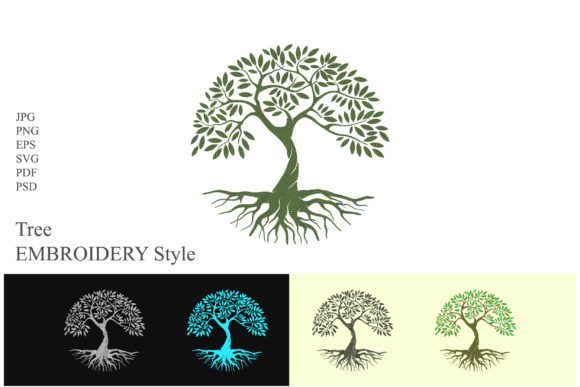
Tree Embroidery Style Logo
A Seasonal Designer’s First Look: Warmth, Versatility, and Holiday Readiness
As an embroidery designer who’s built six holiday collections for Etsy shops and wholesale craft fairs, my first impression of Tree Embroidery Style Logo is immediate and encouraging: it reads as quietly festive—not loud or cartoonish, but grounded, gentle, and emotionally resonant. The line work suggests hand-stitched charm without sacrificing clean vector precision. It leans into cozy nostalgia with a modern silhouette—think woodland elegance rather than Christmas commercialism. That balance makes it unusually flexible: equally at home on a linen baby blanket as it is on a rustic apron or a minimalist ceramic ornament tag. There’s no overt holiday symbol (no snowflakes, no ornaments hanging from branches), yet the shape, rhythm, and organic flow of the tree evoke seasonal warmth, quiet reflection, and family-centered gifting.
Where This Design Shines in Real Holiday Selling Situations
Tree Embroidery Style Logo thrives where emotional connection meets practical production—and that’s exactly where small shop owners win during peak season. On sweatshirt embroidery, its open negative space allows fabric texture to breathe, avoiding stiffness. For tote bag design, it scales beautifully across canvas or cotton twill without losing definition. As kitchen towel embroidery, it adds artisanal warmth without overwhelming utility. Pillow covers gain instant cohesion when paired with coordinating thread palettes—forest green, oatmeal, deep plum, or even charcoal gray. And because it’s a vector-based Illustrations asset, you can easily adapt it for embroidered patches, printable mockups, or layered digital embroidery file bundles sold alongside matching SVGs for iron-ons or Cricut projects.
In gift-ready contexts—like curated holiday boxes or family matching items—it builds trust through consistency. Buyers recognize the same refined tree motif across your entire collection: baby onesies, adult aprons, linen napkins, and wooden ornaments. That visual recognition strengthens brand recall during frantic holiday scrolling. On social media previews, it photographs cleanly against natural backdrops—wood grain, wool throws, dried florals—making your handmade gift listings feel intentional and premium. And for craft fair displays? Its simplicity ensures legibility from three feet away, while its detail invites closer inspection—a subtle signal of craftsmanship.
Smart Usage Boundaries: Where to Pause and Plan
Not every surface welcomes this design equally—and skipping these checks can cost time, thread, and customer goodwill. First: avoid using Tree Embroidery Style Logo on items requiring ultra-small hoop sizes (e.g., curved baseball caps or tiny baby socks) unless you’ve confirmed the original vector simplifies cleanly to under 3” wide. Its graceful branches and implied texture may not translate at micro-scale without manual redrawing. Second: tread carefully on thick, dense fabrics like heavyweight terry cloth towels—high stitch density could cause puckering or thread breakage unless paired with cutaway stabilizer and reduced density settings. Third: dark fabric demands thoughtful thread colors—test metallic or light heathered threads to ensure legibility without glare. Fourth: avoid stretchy garments (like ribbed knit tees) without proper tear-away + cutaway stabilizer combo—branch tips may distort during wear. Finally, if planning repeated washing (think kids’ apparel or kitchen linens), confirm the final machine embroidery design uses satin or fill stitches appropriate for durability—not overly delicate outlines.
Why This Design Elevates Your Seasonal Product Strategy
Holiday shoppers don’t just buy products—they buy feelings, memories, and meaning. Tree Embroidery Style Logo delivers that intangible lift without shouting. Its understated elegance increases perceived product value: customers pay more for “thoughtful” over “trendy.” That directly supports personalized gift positioning—add a monogram or date below the trunk, and suddenly it’s heirloom-worthy. For Etsy sellers, it boosts listing cohesion: one versatile graphic becomes the anchor for ten SKUs, reducing design fatigue and speeding up mockup creation. And because it’s rooted in timeless symbolism—not dated trends—it stays relevant beyond December. You’ll reuse it for spring botanical launches, autumn harvest lines, or even wedding favors, maximizing your investment in a single digital embroidery file.
Practical Notes from the Hoop: What Every Embroiderer Should Verify
- Test thread colors on both light and dark fabric—especially if marketing “versatile neutrals.” A single olive thread may read rich on cream but muddy on navy.
- Check stitch density before scaling up—dense fills on large sweatshirts need longer stitch runs and adjusted tension.
- Confirm hoop size compatibility with your primary machines; if selling seasonal embroidery files, note minimum recommended hoop dimensions in your listing.
- Use proper stabilizer based on fabric weight and stitch count—don’t assume “lightweight” means “no stabilizer.”
- Create realistic mockups showing the design stitched—not just vector preview—to set accurate customer expectations.
- Review small details after stitching: branch ends, inner contours, and edge clarity matter most on high-touch items like pillow covers or embroidered patches.
- Plan matching color palettes across your product line—thread, fabric, packaging, and digital assets should harmonize.
- Confirm commercial licensing before selling finished seasonal products—since Tree Embroidery Style Logo is listed as a Graphics asset, verify usage rights for resale of physical goods.
Bottom line: Tree Embroidery Style Logo isn’t just another holiday clipart option. It’s a strategic, emotionally intelligent tool—one that helps small shop product creators build cohesive, trustworthy, and deeply giftable collections without chasing trends. When used intentionally, it transforms everyday items into meaningful moments. And in the heart of holiday season, that’s not just good design—it’s good business.